


If you’re planning a trip to Kos Island, Greece, one historic gem you shouldn’t miss is the Windmill of Antimachia. This fully operational windmill is not just a beautiful sight; it is a living monument to Greek tradition, engineering ingenuity, and rural life in the 19th and 20th centuries. Even more special is the family behind it: the Windmill of Antimachia, the beloved Mastichari Bay Hotel, and the charming Memphis Suites are all owned by the historic Amallos family of Kos. In this blog, we’ll dive deep into the history, structure, and fascinating facts about one of Greece’s last working windmills.
The Rich History of the Windmill of Antimachia
The Windmill of Antimachia holds a rich and inspiring history that stretches back to the 19th century. Originally owned and operated by the village priest, Father Ioannis Amallos, this windmill played a vital role in the lives of local islanders. After a devastating earthquake struck Kos in 1933, Father Ioannis personally restored the windmill to full working order, ensuring the community could continue producing flour for their daily needs.
In the decades that followed, villagers from across Kos would arrive with donkeys loaded with wheat and barley. Instead of paying in cash, they compensated the miller and his assistant with a share of the final product — a beautiful example of a barter economy rooted in trust and necessity.
The windmill continued to operate until the late 1970s, after which it fell into disuse. Fortunately, thanks to the dedication of the Amallos family, both the building and the intricate wooden mechanism inside have been carefully restored. Today, the Windmill of Antimachia stands proudly as one of the very few fully operational and productive windmills in all of Greece, a living symbol of Greek rural heritage.
A Legacy of Hospitality
The Amallos family’s dedication to preserving Kos’ traditions doesn’t stop at the windmill. They are also the proud owners of the Mastichari Bay Hotel, a celebrated beachfront resort known for its warm Greek hospitality, and the Memphis Suites, a charming property offering authentic island stays. Their commitment to maintaining local culture and welcoming visitors with open arms is deeply woven into the fabric of their family’s story.
When you visit any of their properties, you’re not just booking a stay — you’re experiencing the enduring spirit of Kos through a family that treasures its past while embracing the future.
Technical Marvel: The Structure and Mechanism
The architecture and design of the Antimachia Windmill are equally fascinating. Standing at 6 meters tall, with antennae reaching up to 13 meters at their highest point, the windmill commands attention from afar. The building’s diameter is 6 meters, and its walls at the base are impressively thick, measuring around 2 meters wide — a testament to the builders’ craftsmanship and attention to durability.
Inside, the windmill is ingeniously divided into three distinct levels:
- The Lower Part: Used exclusively by the miller for accommodation, food preparation, and rest.
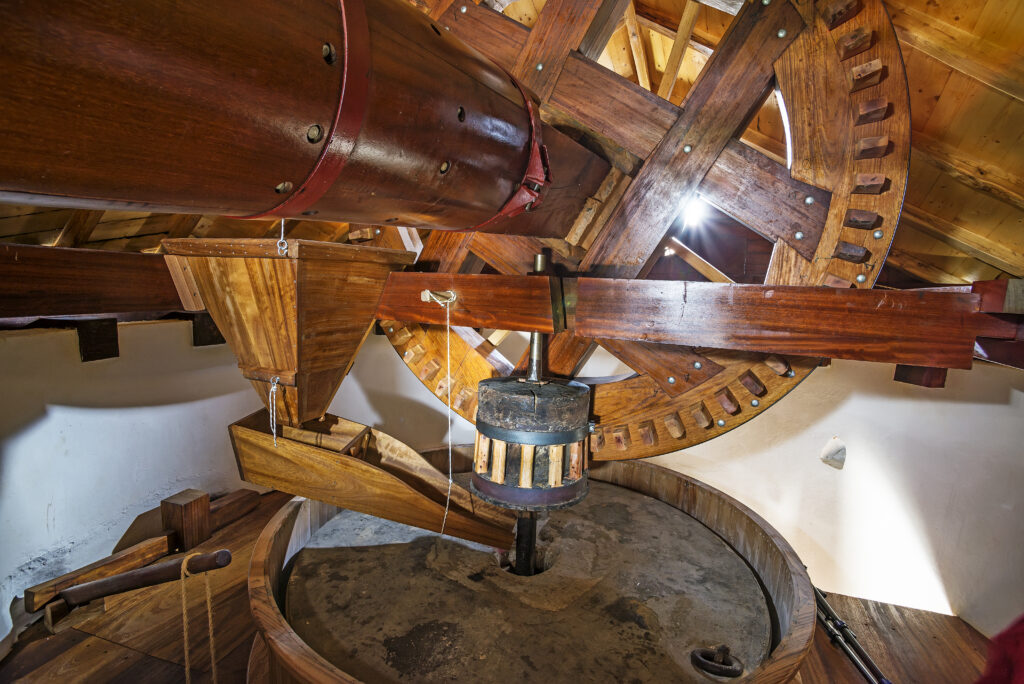
- The Intermediate Part: This level houses the barley and wheat before processing. It’s also where the mechanism that regulates the grinding stones is found.
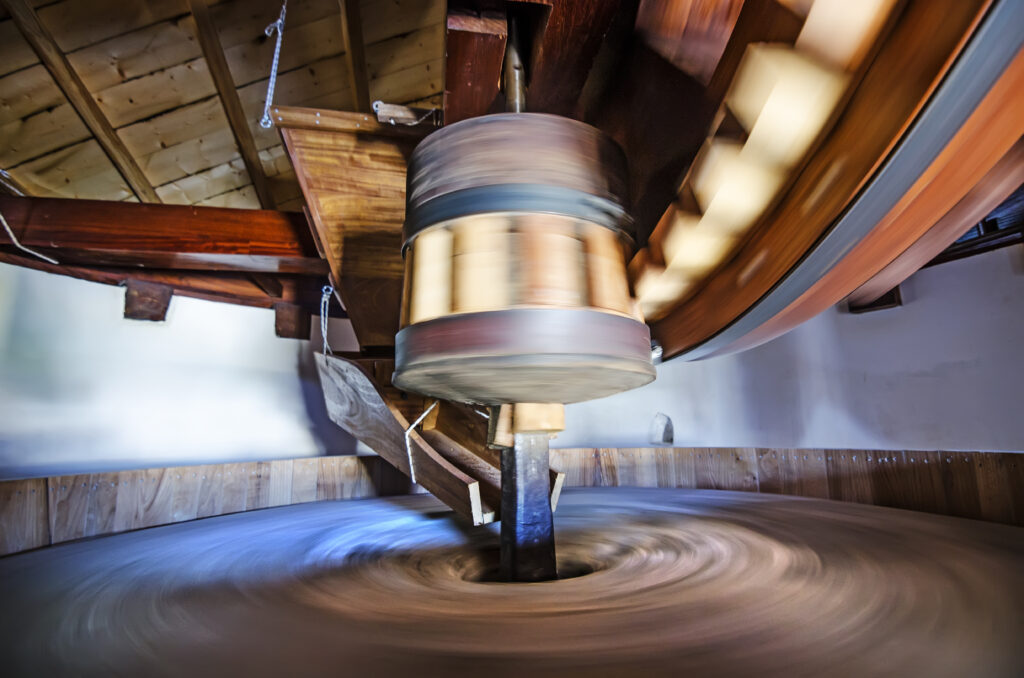
- The Upper Part: Here lies the heart of the windmill — the milling mechanism. Two enormous millstones, each 2 meters in diameter, are mounted to a wooden vertical axis and interconnected with a series of wooden gears and wheels.
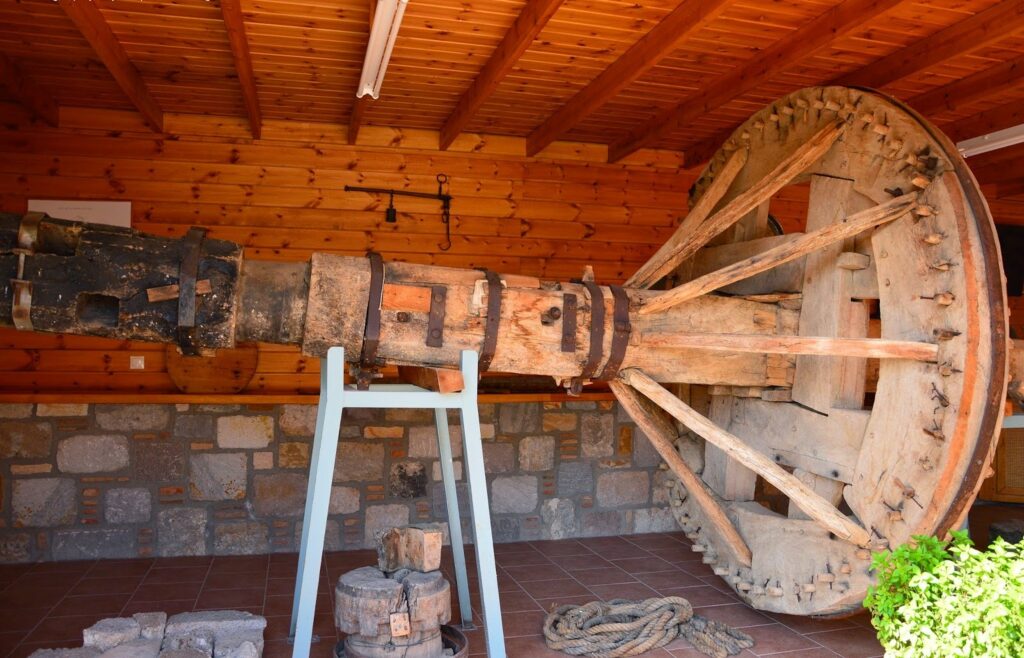
The wooden mechanism is crafted primarily from iroko wood, a highly durable and weather-resistant material renowned worldwide for its strength. A massive horizontal axis and a large wooden gear ensure the efficient transmission of motion from the impeller to the millstones. The upper rim of the windmill also features a rotating mechanism that allows the roof and impeller to turn according to the wind’s direction — a key feature for maintaining efficient milling operations.
Outside, the view is equally stunning, with large wooden antennas and dazzling white sails that capture the power of the island’s frequent winds.
Fascinating Facts About the Windmill of Antimachia
Beyond its beauty and historical significance, the Windmill of Antimachia holds several fascinating secrets:
- Etymology of ‘Mill’: The word “mill” traces its roots back to the mythical Greek King Milis from the Peloponnese, who is credited with inventing the grindstone. From Greek, the word evolved into Latin (“mola” and “molendinum”) and then spread into European languages, becoming “mill,” “moulin,” “Mühle,” and “molino.”
- Grinding Capacity: Under normal wind conditions, the windmill can process between 600 to 700 kilograms of cereals per day — an impressive feat for traditional machinery.
- Ideal Conditions in the Dodecanese: The Dodecanese Islands, including Kos, offer perfect conditions for windmills: strong, consistent winds; excellent local stone for building; and a dry climate that helps preserve wooden components and sails.
- Time and Effort to Build: Constructing a windmill in the old days required more than 800 full daily wages — sunrise-to-sunset work from skilled carpenters, blacksmiths, builders, and laborers.
- Specialized Knowledge: Windmill carpenters were true artisans who mastered the art of selecting, marking, cutting, and assembling wood based on its properties. These skills were closely guarded secrets, passed only to their sons to avoid creating competition.
- Miller’s Weather Wisdom: In the past, millers needed an exceptional ability to predict weather changes, as there were no modern forecasts to guide them.
- Structural Challenges: The forces exerted on the windmill by the moving impeller and the wooden mechanisms can be compared to the stress experienced during an earthquake — a real challenge for ancient builders.
- Maintenance Traditions: Keeping the mill in good condition involves regularly scratching the millstones’ surface (two to three times a year) and oiling the rotating mechanisms to ensure smooth operation.

Visiting the Windmill of Antimachia
The Windmill of Antimachia isn’t just a historic site; it’s a journey back into a simpler, yet remarkably ingenious time. It offers visitors a hands-on look at how natural forces like the wind were harnessed to provide vital resources for entire communities.
Located in the heart of Kos Island, the windmill is easy to reach and makes for an excellent day trip. Whether you’re a history enthusiast, an architecture lover, or simply someone seeking an authentic Greek experience, the Windmill of Antimachia is a must-visit.
For more detailed information, guided tours, and visiting hours, check out the official website: www.kos-windmill.gr.

Conclusion
Exploring the Windmill of Antimachia is like stepping into a living museum where the genius of Greek craftsmanship and the power of nature combine. It’s a testament to the resilience of the people of Kos and an inspiring reminder of the vital role traditional technology played in everyday life.
And through the continuous care of the Amallos family, this legacy of tradition, hospitality, and innovation remains alive for future generations to experience.
Next time you’re on Kos Island, be sure to visit the Windmill of Antimachia — and perhaps stay at the Mastichari Bay Hotel or Memphis Suites for a complete taste of genuine Greek island hospitality!